
Rajarambapu College of Pharmacy, Kasegaon, 415404, Maharashtra, India
The present study focuses on the formulation and evaluation of a polyherbal tea blend designed to relieve stress and promote overall wellness. The formulation incorporates six medicinal ingredients?Chamomile, Ashwagandha, Peppermint, Liquorice root, Acacia gum, and Starch, with natural orange flavor for palatability. Each herb was selected based on its traditional use and scientifically validated therapeutic properties such as anxiolytic, antioxidant, anti-inflammatory, and adaptogenic effects. Three formulations (F1?F3) with varying concentrations were prepared by shade drying, powdering, blending, and sieving of plant materials. The blends were evaluated for organoleptic characteristics, ash value, moisture content, loss on drying, and flow properties, along with preliminary phytochemical screening. Results confirmed the presence of key phytochemicals such as alkaloids, flavonoids, glycosides, carbohydrates, and volatile oils, contributing to the therapeutic potential of the formulations. Among the three blends, Formulation F2 (the mid-blend) showed optimal moisture level, good flowability, and highest sensory acceptability. Thus, the developed polyherbal tea blend (F2) offers a natural, caffeine-free, and functional beverage with promising potential for stress relief and health enhancement.
Herbal teas, also known as tisanes, are beverages prepared from the infusing or decoction of dried leaves, seeds, flowers, barks, fruits, or other botanical components derived from various medicinal plants. Unlike traditional tea obtained from Camellia sinensis, herbal tea are typically caffeine-free and are valued for their wide range of therapeutic and nutritional benefits. Historically, herbal teas have been used across cultures such a Ayurveda, Traditional Chinese Medicine (TCM), and European folk medicine for their curative and preventive health effects. The modern resurgence of herbal tea consumption is attributed to growing awareness about the side effects of synthetic drugs and global shift towards natural and plant-based alternatives. Herbal teas are rich in polyphenols, tannins, flavonoids, terpenoids, and other phytochemicals knwn to exibit antioxidant, anti-inflammatory, antimicrobial, and immunomodulatory properties. These bioactive compounds help in preventing oxidative stress, strengthening immunity, and managing several lifestyle relaed disorders. Depending on the combination of herbs used, herbal teas can serve multiple purposes – from improving digestion, relieving anxiety, and promoting relaxation to reducing cardiovascular risk and enhancing skin health. Studies have demonstrated that Polyherbal formulations, which combine more than one medicinal plant, often shows superior pharmacological activity compared to synergistic effects among phytoconstituents. Among the various medicinal plants, Camellia sinensis, Moringa oleifera, Tulsi (Ocimum sanctum), Stevia rebaudiana, Amla (Embelica officinalis), and Zingiber officinalis are widely used for preparing herbal teas. These herbs not only impart pleasant aroma and taste but also provide numerous health benefits such as antioxidant, hepatoprotective, cardioprotective, and anti-diabetic effects. Recent research has focused on the development of Polyherbal tea formulations that enhances bioavailability, stability, and overall wellness benefits. Therefore, the present study aims to formulate and evaluate a Polyherbal tea blend combining selected medicinal plants based on their traditional and scientific evidence for antioxidant and therapeutic potential. The formulation is expected to serve as a natural, safe, and functional beverage that supports overall health and immunity enhancement.
MATERIALS AND METHODS:
Sample Collection:
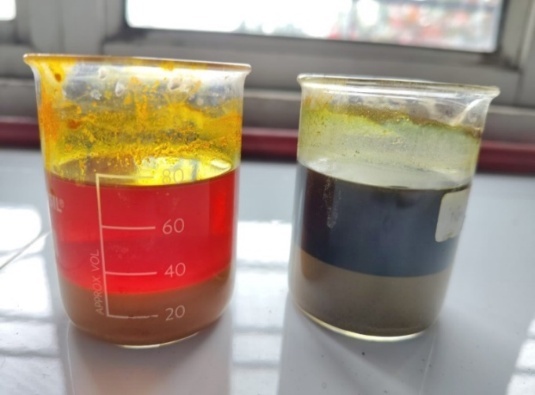
The required ingredients were collected and pure active ingredients were obtained through the extraction process.
1. Chamomile:
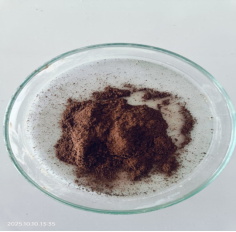
Biological Source:
The biological source of chamomile is the dried flower heads of two main species: 1. Matricariarecutita 2. Chamomillarecutita. Both the species belong to the family Asteraceae, also known as the daisy or composite family.
Chemical Constituents:
Chamomile (Matricaria Chamomilla) contains several active constituents that contribute to its stress relieving properties. The primary compounds responsible for its calming and anxiolytic effects include:
Medicinal Uses: It has anti-inflammatory and Calming effects on CNS.
2. Ashwangandha:
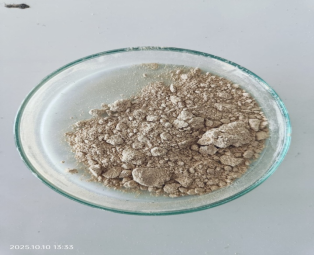
1. Withanolides: They exhibit anti-inflammatory and anti-stress properties.
Examples: Withaferin A, Withanolide A, Withanolide
2. Alkaloids: Compounds like isopelletierine, anaferine, somniferine act as ashwagandha’s calming effects.
3. Sitoindosides: These are glycosylated derivatives of withanolides.
4. Other compounds: Saponins and Flavonoids.
3. Peppermint:
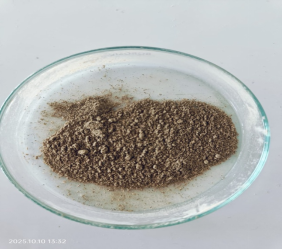
4. Liquorice Root:
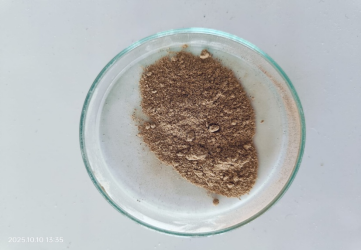
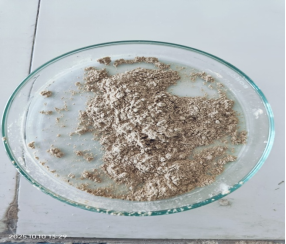
5. Acacia:
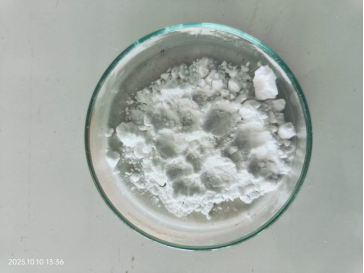
6. Starch:
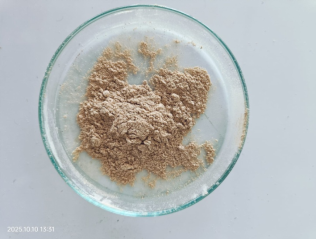
7. Orange Flavour Powder:
Preparation of plant material, solvent selection and extraction methods:
1. Chamomile:
2. Ashwagandha:
Preparation of Herbal Tea Powder:
Formulation Table:
|
Sr.no. |
Ingredients |
F1 (Low blend) |
F2 (Mild blend) |
F3 (High blend) |
|
1 |
Chamomile |
0.4 gm |
0.6 gm |
0.8 gm |
|
2 |
Ashwagandha |
0.5 gm |
0.5 gm |
0.5 gm |
|
3 |
Peppermint |
0.2 gm |
0.4 gm |
0.6 gm |
|
4 |
Liquorice |
0.2 gm |
0.2 gm |
0.2 gm |
|
5 |
Starch |
0.1 gm |
0.1 gm |
0.1 gm |
|
6 |
Acacia |
0.05 gm |
0.10 gm |
0.15 gm |
|
7 |
Orange Flavour |
0.05 gm |
0.05 gm |
0.05 gm |
Procedure:
1) Drying: Dried all herbal ingredients under shade to remove moisture.
2) Grinding: Each dried herb grinded separately to make fine powder.
3) Sieving: All the powders were passed through a fine sieve to obtain uniform particle size.
4) Weighing: All powders accurately weighed as per formulation’
5) Mixing: Herbal powders were mixed together in a clean, dry bowl. Gum acacia, starch, natural orange flavour were added. Mixed thoroughly to ensure uniform blending.
6) Sieving: The final blend was passed once more to remove lumps.
7) Packaging: Packed the blend in a airtight container and also filled 2g in per tea bag. Labeled properly with name, ingredients, and storage conditions.
8) Storage: Store in cool, dry place away from sunlight and moisture.
Evaluation Tests for Herbal tea blend:
A) Physiological Evaluation
1) Organoleptic Properties:
The colour, odour, taste, and texture of the tea powder were evaluated. Two grams of each dry herbal tea sample were placed in a Petri dish, and a panel of six assessors evaluated their colour, smell, taste, and texture.
2) Ash value:
Two grams of the herbal material were weighed into a crucible that had been preheated at 105 ± 2°C for 5 minutes and cooled in a desicator. The sample was then incinerated at 525 ± 25°C. After cooling, the crucible was weighed, reheated for 30 minutes, and weighed again. This process was repeated until a constant weight was obtained. The ash value percentage was calculated using Equation
Ash Value (%) =Weight of Sample Weight of Ash?×100
Where,
W1 = weight of crucible with ash, W2 = weight of crucible with sample, and W3 = weight of empty crucible.
3) Moisture content:
Three grams of the herbal material were weighed into an evaporating dish that had been preheated at 105 ± 2°C for 5 minutes and cooled in a desicator before use. The evaporating dish containing the powder was placed in an oven at 105 ± 2°C. It was removed every 30 minutes and weighed until two consecutive readings showed no change in weight. This process was repeated three times. The moisture content percentage was then calculated using Equation 2.
Moisture Content (%) = W1?−W3?/W1?−W2??×100
Where:
W? = weight of crucible + sample before drying
W? = weight of crucible + sample after drying
W? = weight of empty crucible
This formula gives the percentage of moisture lost from the sample during drying.
4) Flow Properties of tea powder
a) The angle of repose:
The static angle of repose (α) was measured using the fixed funnel and free-standing cone method. Fifty grams of powder were placed in a funnel with a 1 cm orifice, positioned 10 cm above a flat surface. The funnel’s tip was initially closed, then released to allow the powder to flow freely onto the surface. After all the powder had drained, the height and diameter of the formed cone were measured. The procedure was repeated three times.
The angle of repose was then calculated using the formula:
Tan ?o = 2H/D
Where,
?o = angle of repose, H = height and
D = diameter.
b) Bulk and Tapped Densities:
The volume occupied by 50 g of granules was measured using a 200 mL graduated cylinder. The tapped volume, obtained after consolidation using an automated tapping machine (Sample volumeter, STAV 2003JEF, Germany), was also recorded. Both the bulk volume (V?) and tapped volume (V_T) were determined. The bulk and tapped densities were calculated by dividing the weight of the granules by their bulk (V?) and tapped (V_T) volumes, respectively, as shown in Equation 5.
Mass (g)/Volume (Vo or VT)
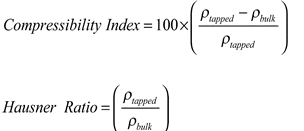
c) Compressibility Index and Hausner’s Ratio:
The compressibility index (CI %) was calculated from the bulk and tapped densities using Equation 6.
The formula for the Compressibility Index (CI %) is:
5) Loss on Drying:
Loss on drying is the loss of weight expressed as % w/w resulting matter can be driven off under specified condition. weight about 2gm of the air-dried crude drug in in dried in tarred flat weighing dish. Dry in oven at 100-105% C. Cool in desiccators over phosphorus pentoxide for specific period of time. The loss in weight is recorded as moisture. Repeat the process till constant weight is obtained.
B) Preliminary Phytochemical Screening:
|
Sr. No. |
Test |
Procedure |
Observation |
|
1. |
Glycoside: a. Keller kiliani test |
1ml filtrate+1.5ml glacial acetic acid+1 drop of ferric chloride+conc.H2SO4 |
Reddish colour appear |
|
2. |
Carbohydrates: a. Molish Test |
2ml filtrate+2-3 drops of Molish reagent +1ml conc. H2SO4 |
Purple or violet colour ring at the interface of two layers |
Reference


Swapnaja Kadam, Bhagyashree Dane, Yash Patil, Manasvi Jarag*, Vidya Dange, Formulation and Evaluation of Stress Relief Herbal Tea, Int. J. Med. Pharm. Sci., 2025, 1 (11), 110-119. https://doi.org/10.5281/zenodo.17645871 More related articlesDesign and Evaluation of Propranolol Loaded Bio Fl...Deepika Kunwar, ...Review on Green Synthesis of 3-4dihydropyrimidinon...Lohakare Sejal, Bhangare Pradnya, Bhangare Rutuja, Phalke Pallavi...A Review on Targeted Drug Delivery in Cancer Thera...Gayatri Khanderao, Arun Mante, Samadhan Magar, Nitin Lodhe, Anata...Formulation and Evaluation of Herbal Medicated Jelly for Mouth Ulcer...Darshan Paraskar, Aditi Tikait, Dr. Swati Deshmukh, ...Formulation and Characterization of Microemulsion Made by the Combination of Car...Kavita, Pranav Kumar Upadhyay, ...Multifunctional Polymeric Nanocarriers To Overcome Gastrointestinal Barriers in ...P. Nanthagopal, D. Nagavalli, G. Abirami, R. Prethingadevi, ...
Related ArticlesFormulation and Evaluation of Aloevera and Lycopene Based Sunscreen Lotion...Pragati Malakar, Sunita Sonartiya, Rajat Pawar, Dishant Gupta, Sunita Patidar, ...A Review on the Role of Artificial Intelligence in the Pharma Industry...Vaibhav Shikare, Urmila Ingole, Ashish Gawai, Pavan Idhole, ...Synthesis and Biological Evaluation of Some Thiadiazole Derivatives as Antituber...Divya Namdev, Dr. Archana Tiwari, Dr. Ravinder Kaur, ...Review on Green Synthesis of Nanoparticles Using Tulsi (Ocimum sanctum) Leaf Ext...Mohini Avhad, Satyam Aute, Somnath Davkhar, Hemant Gangurade, ...More related articlesDesign and Evaluation of Propranolol Loaded Bio Flexi Ocusert Using Cocos Nucife...Deepika Kunwar, ...Review on Green Synthesis of 3-4dihydropyrimidinone Using NaDES...Lohakare Sejal, Bhangare Pradnya, Bhangare Rutuja, Phalke Pallavi, ...A Review on Targeted Drug Delivery in Cancer Therapy: Advances, Challenges, and ...Gayatri Khanderao, Arun Mante, Samadhan Magar, Nitin Lodhe, Anata Gite, Shivaji Mohrut, Nilesh Sawad...Design and Evaluation of Propranolol Loaded Bio Flexi Ocusert Using Cocos Nucife...Deepika Kunwar, ...Review on Green Synthesis of 3-4dihydropyrimidinone Using NaDES...Lohakare Sejal, Bhangare Pradnya, Bhangare Rutuja, Phalke Pallavi, ...A Review on Targeted Drug Delivery in Cancer Therapy: Advances, Challenges, and ...Gayatri Khanderao, Arun Mante, Samadhan Magar, Nitin Lodhe, Anata Gite, Shivaji Mohrut, Nilesh Sawad... |

 10.5281/zenodo.17645871